Oolichan Crisis 2007
The Taiwan Democracy Project
Designed to address
health disparities of American Indians. Health disparities are ìdifferences in
the incidence, prevalence, mortality, and burden of diseases and other adverse
health conditions that exist among specific population groups in the United
States.î Funded by the National Institutes of Health, National Center for
Complementary and Alternative Medicine the study addresses the two often
neglected areas of research in Indian Country: The increased health mortality
and morbidity of people who care for elders, and the use of a culturally
congruent traditional (indigenous) therapy as a treatment method.
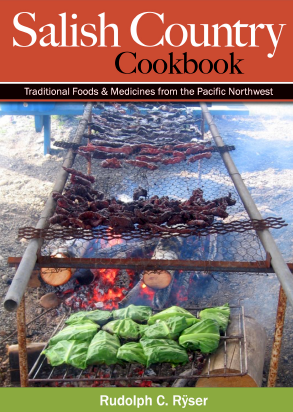
An ongoing CWIS project in which the nutritional and cultural value of the Oolichan (herring fish) is explored. Oolichan oil has, for untold centuries, been one of the most valuable commodities of a vigorous northeastern Pacific coast trade. Coming soon to our Media Center: The CWIS production of The Oolichan Grease Trail Documentary. Grease Trails tells the little known story of the Oolichan fish and its relation to the Native people of the Northwest. All along the Northwest Coast of America, Native tribes developed their diverse traditions around the harvesting, processing and distribution of this small but important fish. For thousands of years, the Oolichan was central to the culture of Northwest Coastal tribes. Grease Trails brings the audience on a journey into an older world, crowded with spirits and supernatural beings like Txamsen, the giant, Natmuqcin, and the Transformers, Xexa:ls and into the lives of the descendants of the grease trails original travelers. » Click here to view or download: "Trading across time and space: Culture along the North American "Grease Trails" from a European perspective.' by CWIS Traditional Health Policy Fellow Mirjam Hirsh.
An continuing
research effort coordinated by Dr. Richard A. Griggs. The project focuses on the
documentation of the social, economic, political and territorial characteristics
of the worlds surviving original nations. In cooperation with researchers in the
Department of Geography at the University of California - Berkeley and the
Department of Sociology and Anthropology at the University of Queensland, and
contributors of individual nations, CWIS is building a detailed database and
maps depicting Fourth World Nations.
The Fourth World Community Trauma Study (1996 to 2006) This ten-year study initiated by CWIS first began as a priority in 1996. The Study was an applied research project focusing on the evaluation and treatment of native communities, which have suffered traumatic stress due to sustained experiences with violence, torture, displacement, and attempted genocide. The Study focused on traumatized populations which have experienced "historical violence" and those populations that have experienced violence in the modern era. Preliminary results from the study have been published in the book: "Indigenous Peoples and Diabetes Community Empowerment and Wellness" by Mariana Leal Ferreira & Gretchen Chesley Lang. Right Wing and Anti-Indian Network Project (RWAIN) Originally sponsored by CWIS beginning in 1986. The Center conducted this project to study the phenomenon of population displacement by non-tribal members experienced by Indian nations in the United States. The study was conducted in cooperation with Indian Tribes, local organizations, the Western States Center and the Center for Democratic Renewal. The project examined and updated data for events in the United States of America, with a new phase beginning in 1996 with a focus on Canada. In 2004 and the years beyond, Anti-Indian organizing continues unabated. » Click here to view or download "Anti-Indian Movement on the Tribal Frontier," an article written by Dr. Rudolph C. Ryser. » Click here to read about new efforts to consolidate the Anti-Indian Movement in David Neiwert's online essay, "The Last Indian War " (Neiwert is a former national award-winning journalist and current editor of Orcinus.) As Neiwert notes, land remains at the bottom of efforts to remove Indian people from Indian reservations. Learn more too about how the Anti-Indian Movement has consolidated power in the US Congress, in the Executive Branch and in the Courts. Current research includes analyzing "Indian Removal" in the United States as a pattern repeated in countries like Brazil, Israel, Mexico, Burma, and Australia. Self-Government Process Evaluation Project (SGPE) Commissioned by the Lummi Nation Education and Communication Project to evaluate the negotiation and implementation of Compacts of Self-Government between thirty-three Indian governments and the government of the United States. Within this eight month study, CWIS examined documents and communications by affected Indian Governments and the United States, publishing a final project in 1995. » Click here to view "Indian Self-Government Process Evaluation Project" by Dr. Rudolph C. Ryser. The New-Age Indians Study A research effort coordinated by Rosalee Tizya, Chief George Manuel Chair for Fourth World Politics. This study examined the abuse and misuse of ceremony and ritual by non-tribal native people who have not been properly trained by spiritual leaders. The study focused primarily within Canada.
|
|||||||||||


The Oolichan fish once flourished along the Pacific Northwest from Alaska to British Columbia and as far south as Northern California. Their disappearance from our coastal streams during the last fifteen years has become an important topic among First Nations in Canada.
After each winter the Oolichan fish were the first to come up river.
Seeks to empower the
constructive formation of democratic institutions for the Paiwan,
Taroko and Tsao Taiwanese indigenous tribes by conducting a comparative
participatory action study of the institutions of Taiwanese tribal
self-government to support the employment of democratic values and institutions
and the conduct of government-to-government relations with the Taiwan (R.O.C.)
government as part of a new partnership. The comparison of Taiwanese tribes with
Canadian tribes (involved in a similar self-government process) will provide a
contrasting view of tribal self-government to illustrate the meaning of
democratic institutions in a tribal context.
The
Pacific Northwest Oolichan Oil Project
The Fourth World Atlas Project